
 Add your solution
Menu

France’s Bonus Réparation explained: what brands and repairers need to know
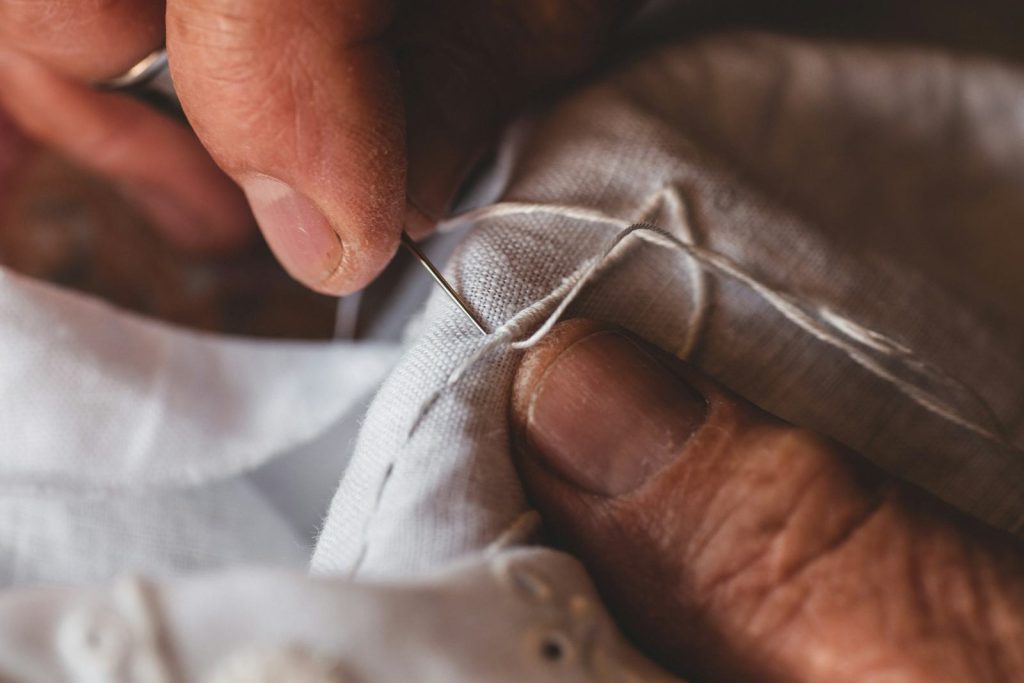
Short answer: France’s Bonus Réparation is an instant discount of €6 to €25 per repair on clothing, household linen, lingerie and footwear, paid for by the textile EPR scheme and run by Refashion, the producer responsibility organisation for the sector. Customers get it at the till, but only from repairers Refashion has labelled. The repairer deducts the bonus from the bill, declares the repair and is reimbursed by Refashion within 15 days. For brands that sell in France, it means two things: you already help fund it through your eco-contributions and must tell customers it exists, and you can get your own repair service labelled so your customers pay less to repair what you sold them.
Below: how it works, what each repair is worth, how to get labelled and what to do about it. For EPR fees, see how to budget for textile EPR fees in France and the Netherlands.
This article reflects Refashion, Service Public and Légifrance pages as they stood on 18 November 2026. Amounts and rules can change, so check Refashion’s current list before you rely on them. It is not legal advice.
What the Bonus Réparation is and who pays for it
The Bonus Réparation is the main tool of the textile Repair Fund (Fonds Réparation). France’s AGEC anti-waste law created repair funds in several EPR sectors; the rules sit in the Environment Code (article L541-10-4 and articles R541-146 to R541-152). For textiles, household linen and footwear, Refashion runs the fund at the request of the public authorities.
The money comes from the eco-contributions that brands and retailers pay on every item they place on the French market. Refashion says 13% of eco-contributions finance the Repair Fund. The target in Refashion’s specifications is a 35% increase in the volume of textiles and footwear repaired in France by 2028.
The scheme started in November 2023. Refashion’s figures give a sense of scale:
- In 2024, more than 550,000 repairs were made with the bonus, €6.7 million was paid out and more than 1,500 repairers were labelled, 37% of them companies that place products on the market (brands and retailers).
- Since launch, Refashion’s consumer page reports more than 1.5 million repairs and €14.5 million in discounts.
- A 2025 Refashion and L’ObSoCo study, cited in Refashion’s June 2026 labelling guide, found that 60.8 million fashion items were repaired in France in 2024 and that nearly one in two French people know about the bonus.
So the bonus still covers only a slice of all repairs. That gap is the opportunity.
Which repairs qualify
All clothing, household linen, lingerie and footwear from the textile EPR scope can qualify. Household linen and lingerie were added in April 2025. Refashion lists two exceptions: leather garments and real fur garments.
Three limits matter in practice:
- Repairs, not alterations. Taking up hems or resizing is not eligible, and neither is upcycling.
- Not under warranty. Refashion describes the bonus as being for items no longer under guarantee, and Service Public states that repairs carried out under the legal guarantee of conformity or another commercial guarantee cannot receive it. Free warranty repairs stay your cost.
- Local repair. Service Public says repairs carried out far from where the customer dropped off the item, against the proximity principle, are excluded.
How much each repair is worth
The bonus is a fixed amount per type of repair, set by Refashion. Refashion describes the discounts as cumulative, and a bonus can never exceed 60% of the repair price including VAT. In practice, the full €6 bonus only fits a repair priced at €10 or more.
Refashion’s list for clothing, household linen and lingerie, as published on 18 November 2026:
| Repair (Refashion’s wording) | In English | Bonus |
|---|---|---|
| Couture défaite, non doublée | Undone seam, unlined | €6 |
| Trou, accroc, déchirure | Hole, snag or tear | €7 |
| Couture défaite, doublée | Undone seam, lined | €8 |
| Changement zip, petit | Zip replacement, small | €8 |
| Doublure simple | Simple lining | €10 |
| Changement zip, grand | Zip replacement, large | €15 |
| Doublure complexe | Complex lining | €25 |
| Remplacement de curseur | Zip slider replacement | €7 |
| Remplacement d’élastique distendu | Stretched elastic replacement | €7 |
| Remplacement de velcros | Hook-and-loop (Velcro) replacement | €7 |
| Remplacement d’une paire de baleines | Replacement of a pair of boning stays | €7 |
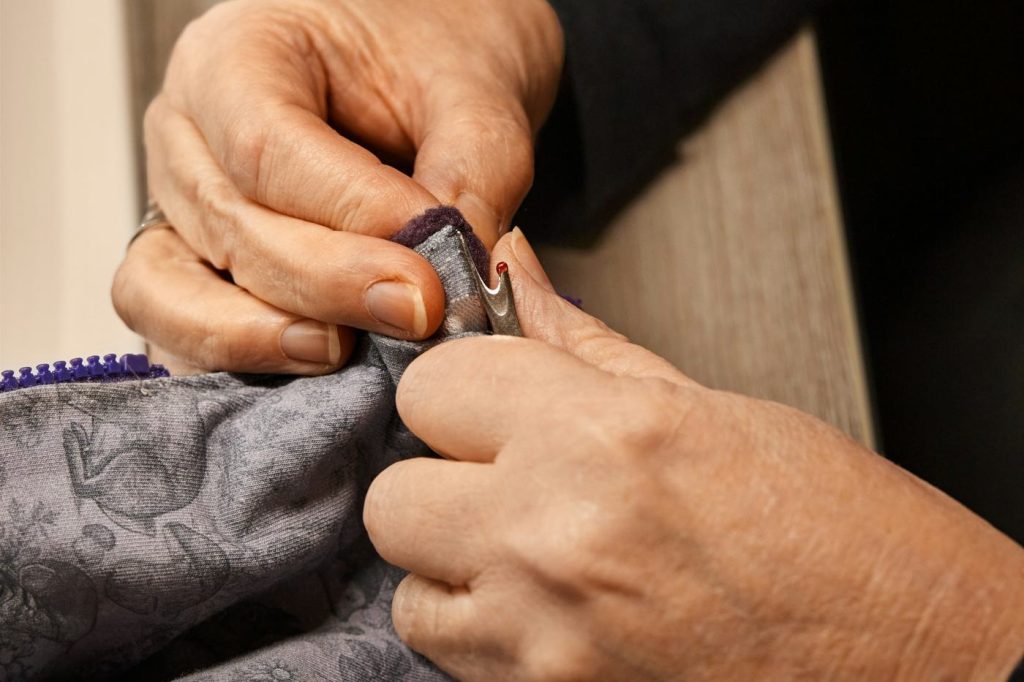
The last four lines are spare-part replacements, a newer addition. Useful signal for product teams: swappable sliders, elastics and fasteners now earn a bonus too.
For footwear:
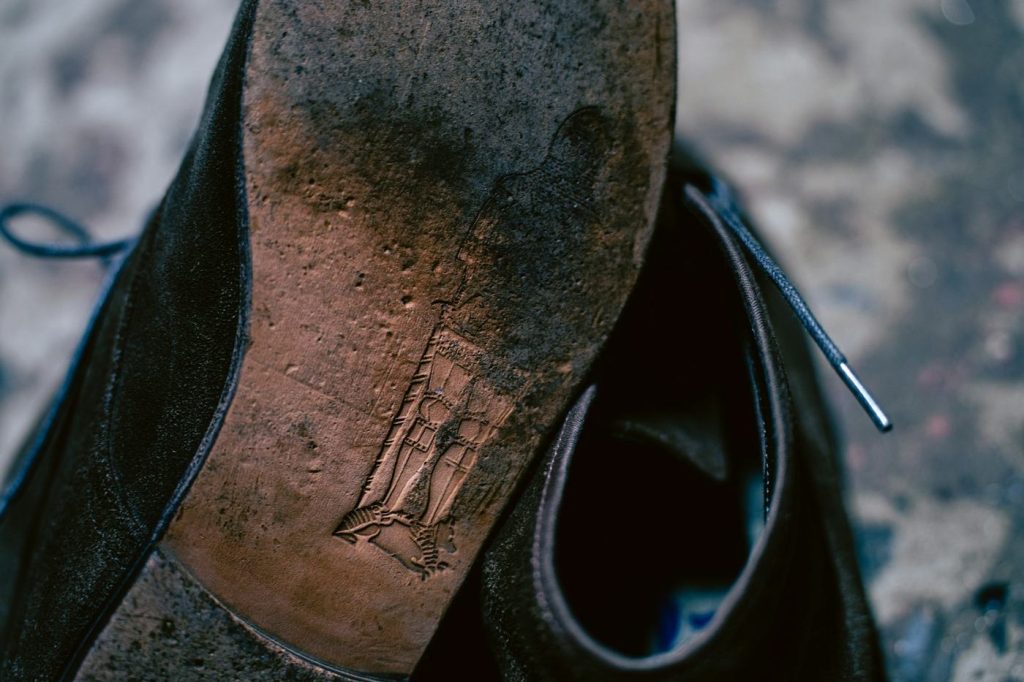
| Repair (Refashion’s wording) | In English | Bonus |
|---|---|---|
| Changement bonbout | Heel tip replacement | €7 |
| Remplacement de boucles | Buckle replacement | €7 |
| Remplacement de brides | Strap replacement | €7 |
| Remplacement d’élastiques sur brides | Elastic on straps replacement | €7 |
| Remplacement d’élastiques d’aisance | Comfort elastic replacement | €7 |
| Pose patin | Sole protector fitting | €8 |
| Opération couture collage | Stitching and gluing | €8 |
| Changement zip, moins de 20 cm | Zip replacement, under 20 cm | €10 |
| Changement zip, plus de 20 cm | Zip replacement, over 20 cm | €14 |
| Ressemelage gomme | Rubber resole | €18 |
| Ressemelage cuir | Leather resole | €25 |
How the discount is applied and reimbursed
An illustrative example: a customer brings in a lined jacket with a broken small zip and a split lined seam. The labelled repairer charges €30 for the zip and €20 for the seam.
- Quote and invoice. The repairer tells the customer the bonus amount and the price after the bonus. The invoice must show the total price, the bonus and the amount the customer pays. Here: €50 total, €8 + €8 = €16 bonus, €34 to pay.
- Declare. The repairer declares the repair to Refashion through its declaration app or, for larger networks, an API, with the paid invoice.
- Get paid. Refashion pays the €16. Since 1 July 2024, the Environment Code sets a 15-day deadline from receipt of the paid invoice (before that it was up to 30 days). Refashion advertises reimbursement in under 15 days.
The repairer gets its full price; the customer pays less. That is the whole design.
How repairers get labelled
Labelling is free, and Refashion states that no other organisation can label repairers for textiles and footwear. Applications are made on Refashion’s repairer portal (reparateur.refashion.fr). Under the Environment Code, Refashion must decide within three months of receiving a complete file, or the labelling is deemed granted.
For an independent tailor or cobbler, Refashion asks for:
- A company registration extract under three months old, an URSSAF certificate and a tax compliance certificate.
- Proof of skills: a textile or footwear qualification, or a detailed CV showing at least three years in repair.
- Proof of activity: six customer repair invoices under three months old, and six invoices for equipment or consumables.
- ID for the legal representative and bank details.
Service Public lists the commitments that come with the label: a commercial guarantee of at least three months on the repair, a visible notice about the bonus outside the premises and on the website, and professional qualification. Labelled repairers appear on Refashion’s public map and can apply for support with training, digitalisation and equipment.
What it means for brands selling in France
1. You must tell customers about the Repair Fund
Since 1 July 2024, distributors of products covered by a repair fund must inform consumers, visibly and legibly, about the repair financing (article R541-151 of the Environment Code, added by decree 2024-123). Refashion’s FAQ says this applies in French shops and on French e-shops, and to every producer, even if its own products fall outside the bonus categories. Refashion offers an optional A3 poster and web banner; your own design is fine, without the Refashion logo. Refashion’s FAQ also points to the general sanction regime: an administrative fine of up to €7,500 per unit or per tonne after formal notice. Keep the wording factual; our green claims guide covers how to talk about repair without overclaiming.
2. You can get your own repair service labelled
More than a third of labelled repairers are brands and retailers. Refashion’s June 2026 guide gives brands a simplified route in seven steps: company type (shop, no physical shop, store network or digital solution), legal entity, legal representative, shops (one by one or a bulk import with 16 columns per shop), price grid, a referent repairer and the people who will declare repairs. Two details are worth knowing before you start:
- You can label a subcontracted service. If a partner workshop does the work, you add it as referent repairer with its sworn statement, proof of your contract and three repair invoices or receipts.
- You can limit it to your own brand. The shop file has a field for whether you repair only your own brand.
Our step-by-step guide on how to launch a clothing repair programme covers the operating model, pricing and customer journey around it. If you need a partner, start with our garment repair services for brands and the best clothing repair services in Europe. French options in the directory include Reekom (formerly Tilli), which handles repairs for brands’ customers through a network of local artisans, and Prolong, an after-sales management platform. Refashion also runs Re_pare, a free directory where brands can search repairers by location, skills, equipment and capacity (Refashion does not vouch for their quality).
3. Price your repairs with the bonus in mind
The bonus is capped at 60% of the price and warranty repairs get nothing. So keep free warranty fixes separate from paid repairs, where the bonus lowers what the customer pays, and avoid prices so low that the full bonus no longer fits.
4. Use it in your EPR strategy
Repair also feeds into Refashion’s eco-modulation: the durability score behind the ultra fast fashion penalty includes an incentive-to-repair criterion and, for larger companies, a labelled in-house repair service. We cover the numbers in our EPR costs post, and the legal side in our textile EPR guide.
5. Feed repair data back into design
The bonus list is effectively a map of what breaks: seams, zips, linings, soles. Track which of these come up most for your products and give the data to design and sourcing. Replaceable zip sliders and fasteners, sturdy linings and resolable shoes make repairs cheaper and more likely. Our page on designing for easy care and repairability is a good starting point.
What it means for repairers
For tailors, cobblers and repair start-ups, the label is a sales tool: a visible discount, a place on Refashion’s map and a route to brands looking for partners. The admin is real but finite: a complete file, a price grid and the habit of declaring every eligible repair with its paid invoice. If you work for brands, agree up front who is labelled, who declares and who receives the reimbursement.
How it fits with EU repair rules
The EU Right to Repair Directive requires every Member State to adopt at least one measure that promotes repair, and France’s bonus is an example of a measure that already exists. The directive does not oblige clothing brands to repair their products. See what the Right to Repair Directive does and does not require of fashion brands. For the wider picture, see EU rules for circular fashion and circular fashion solutions in France.
Frequently asked questions
What is the Bonus Réparation in France?
A discount of €6 to €25 per repair on clothing, household linen, lingerie and footwear, financed by textile EPR fees and run by Refashion. Customers get it at the till from labelled repairers, who are then reimbursed.
How much is the clothing repair bonus?
As of 18 November 2026, from €6 for an unlined undone seam to €25 for a complex lining, and from €7 for a heel tip to €25 for a leather resole on footwear. It can never exceed 60% of the repair price including VAT.
Can a fashion brand offer the Bonus Réparation?
Yes. Brands can get their repair service labelled for free, including one run by a subcontracted workshop, and can limit it to their own products. In 2024, 37% of labelled repairers were brands and retailers.
Do warranty repairs qualify?
No. Service Public states that repairs under the legal guarantee of conformity or another commercial guarantee are excluded. The bonus is for paid repairs on items no longer under guarantee. Alterations and upcycling are also excluded.
How quickly are repairers reimbursed?
Within 15 days of Refashion receiving the paid invoice, as required by the Environment Code since 1 July 2024.
Do brands have to display information about the Repair Fund?
Yes, if they sell textiles, household linen or footwear in France: since 1 July 2024, in French shops and online. Refashion provides an optional poster and banner. As of 18 November 2026; not legal advice.
Sources
- Refashion, Le Bonus Réparation (consumer page with current amounts) and Trouver un réparateur, accessed 18 November 2026, in French.
- Refashion Pro, Qu’est-ce que le Fonds Réparation ?, Le bonus réparation (repairers), Comment devenir réparateur labellisé ? (brands), Tout sur la réparation, Re_pare directory and Nouvelles obligations concernant le Fonds Réparation (19 August 2024), in French.
- Refashion, Guide de labellisation au Bonus Réparation: parcours simplifié pour les marques (PDF, June 2026), in French.
- Refashion FAQ, Qu’est-ce que l’obligation d’affichage concernant le Fonds Réparation ? and Quelles sanctions sont applicables ?, in French.
- Service Public Entreprendre, Bonus réparation : en faire bénéficier ses clients (checked 11 July 2025), in French.
- Légifrance, Décret n° 2024-123 du 20 février 2024 on repair funds and article R541-151 of the Environment Code, in French.
Related on SUSTAIN20™: How to launch a clothing repair programme · Repair vs resale vs recycling · Textile EPR costs · Garment repair services for brands · Circular fashion solutions in France · Repair
Header image: Photo: Elio Santos / Unsplash
