Add your solution
Menu

Materials
Recycled cotton: what it is, how it is made, and who supplies it
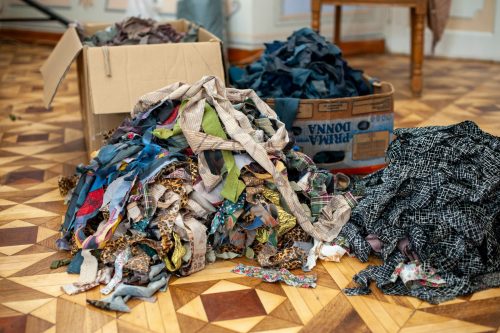
Recycled cotton is cotton fibre recovered from pre-consumer waste (such as cutting scraps) or post-consumer textiles, then opened, cleaned and respun, or used as a feedstock for a new cellulosic fibre. It is still a very small share of all cotton: Textile Exchange’s Materials Market Report 2025 estimates recycled cotton production at 0.3 million tonnes in 2024, against 24.1 million tonnes of virgin cotton, or about 1% of the cotton market.
This page does not rate materials and it is not a preferred-fibre list. For an independent comparison of fibres, see Textile Exchange’s Fiber and Materials Matrix. Public Higg MSI data, where it is published, is another source of impact figures (the Higg tools are run by Worldly; Cascale, formerly the Sustainable Apparel Coalition, is the standard holder). Product claims in the directory are the companies’ own.
Textile Exchange’s figures cover fibre and raw-material production for all applications (apparel, home textiles, footwear and other uses), not only clothing. The report itself says global market data often has gaps, and that it should be read as general guidance, not as advice or a ranking of programmes.
What it is and how it is made
Most recycled cotton on the market today is mechanically recycled: fabrics are shredded or torn, the fibre is shortened in the process, and it is often blended with virgin cotton or another fibre so the yarn will spin and last. Chemically recycled routes start from cotton-rich textile waste and produce a dissolving pulp or a new cellulosic fibre. Those outputs are sometimes branded as “new cotton” or as a next-generation cellulosic rather than as recycled cotton itself — see next-gen cellulosics and mechanical vs chemical recycling.
Variants
- Mechanically recycled cotton, from pre-consumer or post-consumer feedstock.
- Chemically recycled cotton-rich waste, used as pulp or as a new manmade cellulosic fibre.
- Blends (very common), which affect both performance and later recyclability.
Main impacts
According to the same Textile Exchange report, less than 1% of the global fibre market in 2024 came from pre- and post-consumer recycled textiles. Recycled cotton avoids a new cotton crop, but mechanical recycling shortens fibre, which can mean more blending and a different durability profile. Chemical routes have their own energy, solvent and yield questions; those should be taken from the producer’s published data, labelled as such, or from an independent LCA, not inferred here.
What EU rules mean for it
Fibre composition on products sold in the EU must use the official fibre names in Regulation (EU) No 1007/2011. Words such as “recycled”, “organic”, “biodegradable” or “bio-based” are claims, not substitute fibre names, and are covered by green-claims rules. See our guides to green claims in fashion, the Ecodesign for Sustainable Products Regulation (ESPR), digital product passports for textiles and textile extended producer responsibility. An overview is on EU rules for circular fashion. A recycled-cotton product is still labelled “cotton” under 1007/2011; “recycled” is a separate claim.
Standards that exist for it
Common standards are the Global Recycled Standard (GRS) and the Recycled Claim Standard (RCS). We only say a company holds one if its own site or the certifier’s public database shows it, and we link that proof.
Textile Exchange published the Materials Matter Standard on 12 December 2025. According to Textile Exchange, it becomes effective on 31 December 2026 (organisations may then be audited to the new standard or continue under current ones), is mandatory for Tier 4 audits from 31 December 2027, and all claims and labels must use Materials Matter by 30 June 2029. From the mandatory date it is intended to supersede the Global Recycled Standard (GRS), the Recycled Claim Standard (RCS), and the Responsible Wool, Mohair and Alpaca Standards. Always check Textile Exchange’s official transition pages for the current rules.
These companies are listed in the SUSTAIN20™ directory and are tagged with this material based on what their own websites say they make or do. The list is alphabetical and is not a ranking, and inclusion is not an endorsement. Product claims are the companies’ own.
Suppliers and innovators in the Sustain 20 directory
| Company | What they do (from their listing) | Country | Category |
|---|---|---|---|
| Circ | Circ has developed a technology system that returns clothes to the raw materials from which they were made, including by separating polyester-cotton blends. | United States | Recycling |
| Circulose | Circulose is a Swedish textile recycling company that produces CIRCULOSE®, a dissolving pulp made from 100% recycled cotton-rich textiles. | Sweden | Recycling |
| Coleo Fibres | We generate interconnected, collaborative flows of recycled raw materials to meet market demand. | Spain | Material Innovation, Sourcing, Upcycling |
| Labtex | Labtex is a fabric supplier offering more than 10,000 organic and recycled fabrics, with the stated aim of making fashion sustainable. | Taiwan | Sourcing |
| Recover™ | Recover™ is a leading materials science company and global producer of high-quality recycled cotton fiber. | Spain, Bangladesh | Recycling |
| The New Cotton Project | The New Cotton Project harnesses collaboration and cutting-edge technology to create circular fashion In a world first for the fashion industry, twelve pioneering players are… | – | Material Innovation |
What to ask your supplier
- Is the feedstock pre-consumer, post-consumer, or a mix — and can that be documented?
- Is the fibre mechanically recycled, chemically recycled, or a new cellulosic made from cotton-rich waste?
- What share of the yarn or fabric is recycled cotton, and is that certified (GRS, RCS or, later, Materials Matter)?
- What is the fibre blended with, and does that limit later recycling?
- Can the same claim be used in the EU under green-claims and labelling rules?
Frequently asked questions
Is recycled cotton sustainable?
It avoids growing a new cotton crop, but the answer depends on feedstock, the recycling method, blending and durability. Recycled cotton was only about 1% of the cotton market in 2024, according to Textile Exchange. This page does not issue a rating.
Is recycled cotton the same as a next-gen cellulosic fibre made from cotton waste?
Not always. Mechanical recycled cotton is still cotton fibre. Some chemical processes turn cotton-rich waste into a dissolving pulp or a new cellulosic fibre. Those are covered on our next-gen cellulosics page.
How must recycled cotton be labelled in the EU?
The fibre name remains cotton under Regulation (EU) No 1007/2011. “Recycled” is a claim and must follow green-claims rules. See our green-claims guide.
More material guides
- Recycled polyester
- Lyocell
- Next-gen cellulosics
- Viscose and modal
- Leather alternatives
- Organic and regenerative cotton
- Polyester
- Bio-based synthetics
- Wool
- Hemp
- Denim
- Lyocell vs modal vs viscose
- Recycled vs virgin polyester
- Organic vs regenerative vs recycled cotton
- Leather alternatives compared
Sources
- Textile Exchange, Materials Market Report 2025 (published September 2025). textileexchange.org/knowledge-center/reports/materials-market-report-2025
- Textile Exchange, Fiber and Materials Matrix. textileexchange.org/about-materials-matrix
- Textile Exchange, Materials Matter Standard (official page, including the transition timeline). textileexchange.org/materials-matter-standard
- Regulation (EU) No 1007/2011 on textile fibre names and related labelling. eur-lex.europa.eu/legal-content/EN/TXT/?uri=CELEX:32011R1007
- Sustain 20, Green claims in fashion (EU). sustain20.com/guides/green-claims-fashion-eu
- Sustain 20, Digital product passports for textiles under the ESPR. sustain20.com/guides/digital-product-passport-textiles-espr
- Textile Exchange, Global Recycled Standard. textileexchange.org/knowledge-center/documents/global-recycled-standard-grs
- Textile Exchange, Recycled Claim Standard. textileexchange.org/knowledge-center/documents/recycled-claim-standard-rcs
Last updated: 11 November 2026. We review material pages every quarter. Nothing here is legal advice.