
 Add your solution
Menu

How to launch a clothing repair programme for your fashion brand (2026 guide)
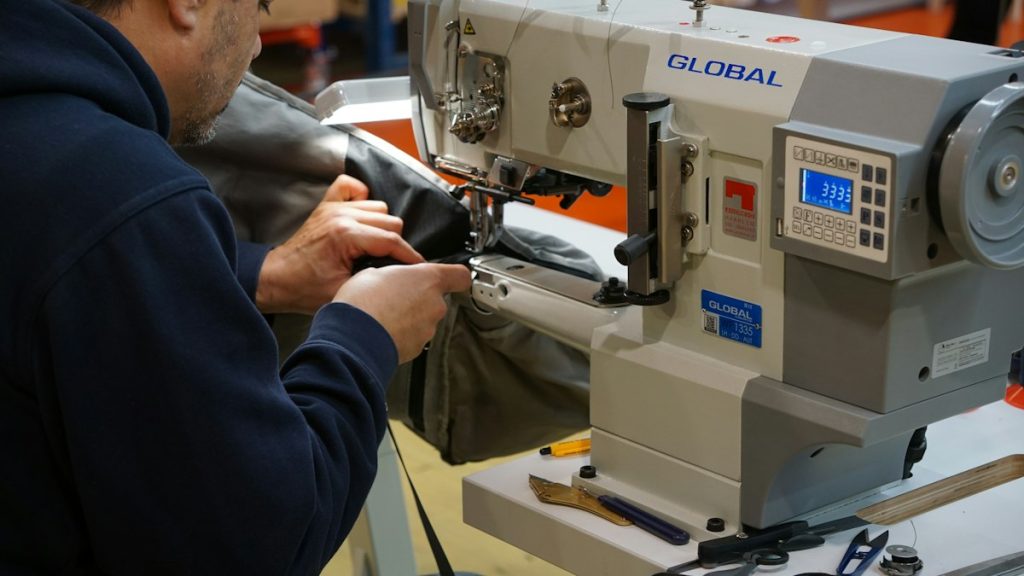
Short answer: a fashion brand can launch a repair programme in five steps: decide why you are doing it and for which products, choose an operating model (in-house, a repair partner, or software plus a network of tailors), set a pricing model, design the customer journey from booking to return, and measure what happens to every item. Most brands start with a partner and a small pilot, then extend repair to returns and damaged stock. Repair now also has a clear EU angle: since 19 July 2026, large companies may no longer destroy unsold clothes and shoes, and the European Commission names repair as one of the ways to keep those products in use.
When you extend repair to the returns line, see how to grade and restore e-commerce returns.
If you are still deciding whether repair is the right first circular model, see which circular business model a fashion brand should start with.
This guide is for brand, e-commerce, customer service and sustainability teams. It explains the decisions in order, and links to the repair companies listed in the SUSTAIN20™ directory. For a full list of providers, see our guide to garment repair services for brands.
This article reflects official sources as they stood on 11 November 2026. It is not legal advice.
Why brands are adding repair now
There are three practical reasons, and one environmental one that sits underneath them.
- Unsold and returned stock. The Ecodesign for Sustainable Products Regulation (ESPR) bans large companies from destroying unsold apparel, clothing accessories and footwear from 19 July 2026 (medium-sized companies from 2030). The Commission says businesses must prioritise keeping products in use by selling them, donating them, or “preparing them for reuse (repairing, refurbishing or remanufacturing)” (European Commission, 17 July 2026). Products returned by consumers under the right of withdrawal count as unsold. A repair capability gives you somewhere to send lightly damaged returns other than a bin. Our guide to the ESPR destruction ban explains the exceptions and reporting duties.
- Future eco-design and EPR fees. Eco-design requirements for textiles, which may cover durability and repairability, are expected in a future ESPR delegated act; the Commission’s working plan gives 2027 as an indicative adoption year. Separately, textile EPR fees in every EU country are to be adjusted using sustainability criteria such as durability (our textile EPR guide covers the dates). Building repair know-how now prepares your product and operations teams for both. If you sell in France, a repair offer can also affect EPR fees; see how to budget for textile EPR fees in France and the Netherlands.
- Customers and repair incentives. In France, the Refashion Bonus Réparation gives customers an instant discount at labelled repairers, from €6 for an undone unlined seam to €25 for a complex lining or a leather resole. Refashion reports more than 1,500 labelled repairers and more than 1.5 million repairs so far (Refashion). Customers there are being taught to expect repair. Our explainer on how the Bonus Réparation works covers who pays for it and which repairs qualify.
The environmental case is long established. WRAP’s Valuing our Clothes report estimated that extending the life of clothing by an extra nine months of active use would reduce its carbon, water and waste footprints by around 20–30% each (WRAP, 2012). Repair is one of the most direct ways a brand can contribute to that.
What the EU Right to Repair Directive does and does not require of fashion brands
This is a common point of confusion. The EU Directive on common rules promoting the repair of goods, Directive (EU) 2024/1799, was adopted on 13 June 2024 and Member States had to apply it from 31 July 2026. Its obligation on manufacturers to repair applies only to products listed in its Annex II, which are products with repairability requirements in EU law, such as washing machines, fridges and smartphones (European Commission). Clothing and footwear are not on that list today.
So, as of November 2026, there is no EU-wide legal obligation for a clothing brand to offer repairs. Two parts of the directive are still relevant to fashion:
- Every Member State must adopt at least one measure that promotes repair, such as repair vouchers, information campaigns or training. France’s Bonus Réparation is an example of the kind of measure that already exists.
- A European online platform for finding repairers is planned as part of the “Your Europe” portal, and the Commission expects it to be operational in January 2028. Member States will manage the registration of repairers.
The Commission also says it will add products to Annex II when new repairability requirements are adopted under the ESPR. If a future textiles delegated act sets repairability requirements, this could change. Follow our EU rules for circular fashion timeline for updates.
For a fuller account of what applies to fashion anyway, including the longer legal guarantee when customers choose repair, see what the EU Right to Repair Directive means for fashion.
Step 1: Decide what repair should do for your brand
Write down one primary goal before you speak to any provider, because it decides almost everything else. Common goals include:
- Customer care and loyalty: repair as part of after-sales service, often paired with a warranty or lifetime promise.
- Stock recovery: repairing returns, transit damage and production defects so they can be sold again at full or near-full price, or through a resale channel.
- Resale preparation: repairing items collected through trade-in before they are resold under your brand.
- Revenue: paid repair and alteration services as a product in their own right.
Then choose the scope of a first pilot: one market, a few product categories you know fail in predictable ways (zips on outerwear, seams on denim, holes in knitwear), and the repair types you will accept. A narrow pilot keeps costs predictable and gives you real data on volumes and turnaround.
Step 2: Choose an operating model
Brands in practice use one of four models, or a mix.
1. In-house repair
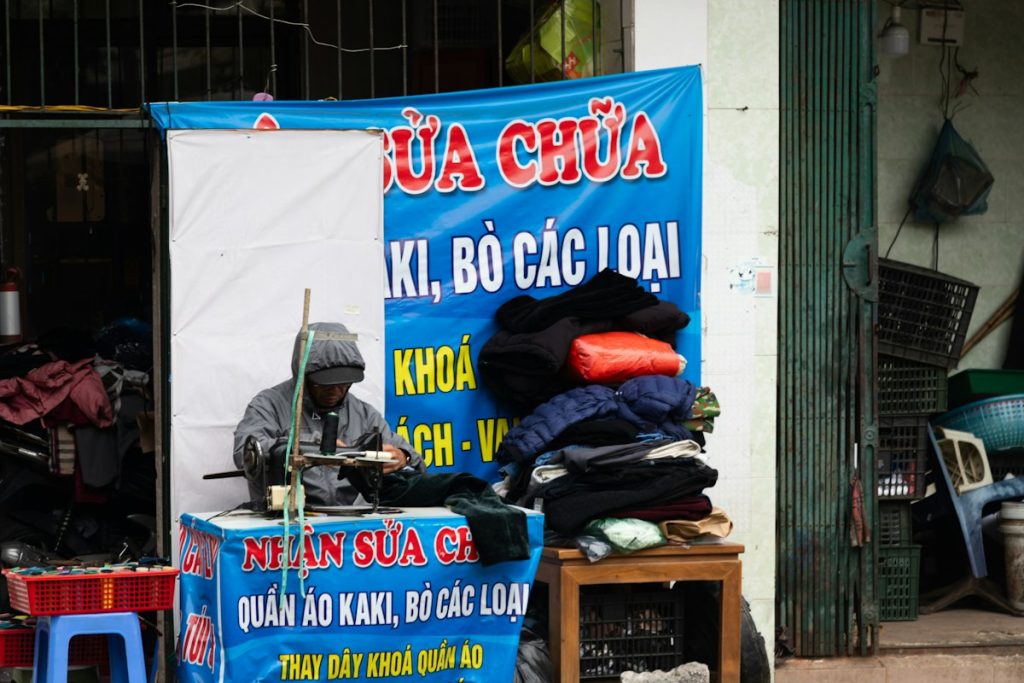
Your own tailors in a workshop, warehouse or flagship store. You keep full control of quality and customer experience, but you carry staff, equipment, training and capacity risk. It suits brands with high volumes of a few product types, or premium brands where repair is part of the brand story.
2. Managed repair partner
A specialist runs repairs for you, usually including logistics and customer communication. In the SUSTAIN20™ directory, United Repair Centre provides garment repair for apparel brands and lists repair centres in Amsterdam and London; Mended describes a fully managed after-sale and repair service for premium brands; The Seam offers care and repair solutions for brands as well as consumers; and Sojo combines a repair and alterations platform with damaged-stock recovery for brands. If you are comparing providers like these, our United Repair Centre alternatives page puts several side by side.
3. Software plus a tailor network
A platform handles booking, pricing, shipping labels and status updates, and routes jobs to a network of independent tailors and cobblers. Alternew describes itself as a care and repair operating system for brands with a vetted tailor network. Reekom (formerly Tilli) offers repairs and alterations for brands’ customers through a network of local artisans, alongside restoring returns to resellable condition. This model can give wide geographic coverage without a central workshop.
4. After-sales software you run yourself
If you already have workshops, service centres or repair partners, after-sales software can tie them together. Prolong offers an after-sales management platform for fashion brands covering repair and service management, and Circulo offers a post-purchase platform for trade-in, service and warranty.
For returns and damaged stock specifically, some operators combine repair with cleaning and fulfilment. ACS (Advanced Clothing Solutions) lists cleaning and repairs alongside rental, resale and returns services, and RecoMended offers textile restoration services for workwear and fashion brands. Descriptions above are taken from each company’s own website as summarised in its directory listing; they are not an endorsement or a ranking.
Step 3: Set a pricing model
Decide who pays, and say it clearly to customers:
- Free under warranty: you pay for defects within your guarantee or lifetime promise. Define what counts as a defect versus wear and tear.
- Customer pays: a published price list per repair type. This is easiest to scale and easiest to compare.
- Subsidised or hybrid: first repair free, discounts for loyalty members, or store credit to offset repair costs.
- Internal cost centre: for repairs on returns and damaged stock, compare the repair cost with the margin recovered when the item is sold again.
If you sell in France, check whether the repairers you work with are labelled by Refashion, since customers can then receive the Bonus Réparation at the point of payment. See how labelled repairers apply the Bonus Réparation. Note that Refashion lists exceptions, including leather garments and real-fur garments.
Step 4: Design the customer journey
Repair fails when it is hard to find or hard to book. Map these touchpoints before launch:
- Discovery: a repair page linked from product pages, care labels or QR codes, order confirmation emails and customer service macros.
- Booking: a short form with photos of the damage, so the item can be triaged and quoted before it is sent.
- Logistics: pre-paid mail-in labels, in-store drop-off, or both. Decide who carries the shipping cost.
- Status updates: received, quoted, in repair, shipped back.
- Unrepairable items: offer trade-in, resale or recycling instead, so the customer still has a good outcome. Our take-back and trade-in guide and branded resale guide list providers for those steps. A practical set-up guide is how to set up a clothing take-back programme. For help choosing a model, see how to choose a resale partner.
Be careful with marketing language. Since 27 September 2026, the Empowering Consumers Directive restricts generic environmental claims to consumers. Describe the service factually (for example, the number of items you actually repaired last year) rather than with vague claims. See our green claims guide.
Step 5: Measure and report
Agree the data with your partner before the pilot starts, so you can decide whether to scale:
- items received, repaired and unrepairable, by product type and fault;
- average turnaround time and cost per repair;
- customer satisfaction and repeat purchase among repair customers;
- for stock recovery: items returned to sale and the value recovered;
- common faults, fed back to design and sourcing teams.
The last point is where repair pays off twice. Fault data shows which zips, seams and fabrics fail, which is exactly the evidence product teams will need when eco-design requirements for textiles arrive. Item-level records also become more useful if you later adopt a Digital Product Passport; our DPP readiness checker includes repair and maintenance information among the data areas it asks about. A practical sequence for preparing that data is in our guide on a step-by-step Digital Product Passport preparation plan for 2027.
A simple checklist for choosing a repair partner
- Which product types and materials can they repair (outerwear, technical, knitwear, denim, footwear, leather)?
- Where are their workshops, and which countries can they serve by mail or in store?
- Do they handle logistics and customer communication, or only the repair?
- Can they work on returns and damaged stock, not just customer repairs?
- How do they price, invoice and report, and who owns the customer data?
- Can they integrate with your e-commerce platform, customer service tools and stores?
Browse all providers in the SUSTAIN20™ Repair category, or by country: UK, Netherlands and US. For France, see circular fashion solutions in France.
Frequently asked questions
Are fashion brands legally required to offer repairs in the EU?
Not as of November 2026. The obligation to repair in Directive (EU) 2024/1799 applies only to products listed in its Annex II, and clothing and footwear are not listed. This could change if repairability requirements for textiles are adopted under the ESPR. Read our full Right to Repair explainer for what the directive does and does not require.
How long does it take to launch a repair programme?
There is no standard timeline. The time depends mainly on the model: working with an existing managed partner or platform avoids hiring and equipping a workshop, so it is usually the quickest way to start a pilot.
Can repair help with the EU ban on destroying unsold clothes?
Yes. The European Commission names preparing products for reuse, including repairing, refurbishing or remanufacturing, as one of the ways companies must prioritise to keep unsold products in use. Returns under the right of withdrawal count as unsold products. For a practical playbook on those routes, see what to do with unsold clothes after the EU destruction ban.
What is the French Bonus Réparation?
It is a discount on clothing, household linen and footwear repairs, paid for through France’s textile EPR scheme and run by Refashion. Customers get it at the point of payment from labelled repairers, with amounts that currently range from €6 to €25 depending on the repair. Read our full Bonus Réparation explainer.
Should a brand repair in-house or use a partner?
In-house repair gives the most control but carries staff and capacity costs. Partners and platforms make it easier to start and to cover more countries. Many brands pilot with a partner and bring the highest-volume repair types in-house later.
Is your repair company missing from this guide?
You can add your solution to the SUSTAIN20™ directory for free.
Sources
- European Commission, Ban on destruction of unsold clothes and shoes enters into application, 17 July 2026.
- European Commission, Directive on repair of goods.
- Directive (EU) 2024/1799 on common rules promoting the repair of goods.
- Refashion, Bonus Réparation (in French), accessed 11 November 2026.
- WRAP, Valuing our Clothes, 2012.
Related on SUSTAIN20™: Repair vs resale vs recycling: which circular business model should a fashion brand start with? · Garment repair services for brands · Best clothing repair services in Europe · EU rules for circular fashion · ESPR and the destruction ban · Textile EPR · Framework principle 12: repairability
Header image: Photo: Luba Glazunova / Unsplash
